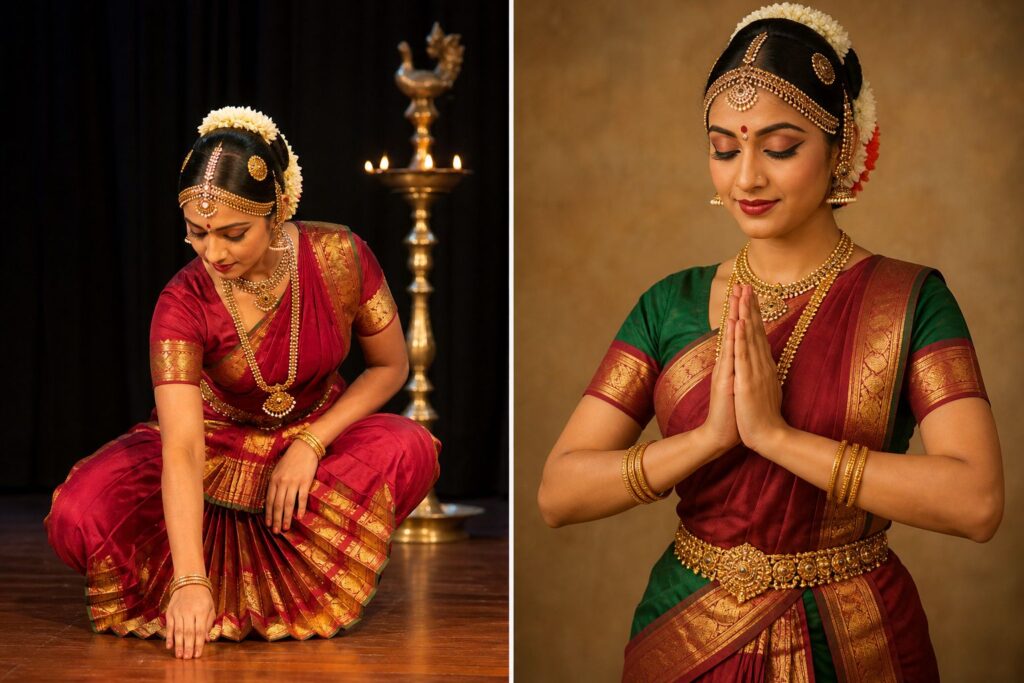
If you’ve ever watched a Bharatanatyam dancer before they begin to perform—or even in the middle of a practice session—you might have noticed a quiet, graceful gesture where they bend down, touch the floor, and bring their hands to their eyes and heart. That’s not just a warm-up or a ritual for the sake of tradition. It’s called the Namaskar, and it holds deep meaning, both spiritually and culturally.
Whether you’re a dancer yourself or just someone curious about this beautiful art form, understanding the Namaskar is like peeking into the soul of Bharatanatyam. Let’s explore what it really means and why it’s so important.
So, What Is Namaskar?
In simple terms, Namaskar is a salutation—a way for the dancer to show respect and ask for blessings. It’s performed at the beginning and end of every class, rehearsal, or stage performance. But it’s not just about being polite. It’s about grounding yourself, honoring your space, and inviting grace into your movements.
Breaking Down the Namaskar (Step-by-Step)
Even though it lasts just a few moments, the Namaskar is packed with intention. Here’s what typically happens:
Step 1: Standing Tall – Samapadam
The dancer starts by standing straight, feet together, hands relaxed. This is the calm before the rhythm—a moment of stillness before the storm of movement.
Step 2: Anjali Mudra – Joining the Palms
The hands come together in front of the chest, in a gesture we all recognize as “Namaste.” It’s a way to center yourself and begin with humility.
Step 3: Into Aramandi – The Foundation Posture
The dancer bends the knees into a half-sitting position called Aramandi—a strong, grounded posture that’s essential to Bharatanatyam.
Step 4: Touching the Earth
With the right hand, the dancer touches the floor gently. This symbolizes asking Mother Earth for forgiveness—for the stomping and stamping that are part of the dance.
Step 5: Touching the Eyes
The hand is then brought to the eyes. It’s as if to say, “May I be granted the vision and clarity to dance well.”
Step 6: Offering Salutations
The dancer now salutes in three directions:
- To the Divine (hands to the head),
- To the Guru or teacher (hands to the heart),
- And to the Audience (hands stretched outward).
Step 7: Back to Stillness
Finally, the dancer returns to the standing posture—grounded, calm, and ready.
Why Is This Small Gesture So Big in Meaning?
You might wonder—why go through all this before even starting to dance?
Here’s why the Namaskar is so special:
It’s an Act of Gratitude
Every part of the Namaskar says “thank you.” To the Earth, for holding us. To the teachers, for guiding us. To the audience, for witnessing. To the divine, for inspiration.
It Prepares the Mind
Before the first beat of music or the first step of an adavu, the Namaskar helps center the dancer’s focus. It brings awareness to the body, breath, and intention.
It Honors Tradition
Bharatanatyam isn’t just a performance—it’s a living tradition. Namaskar keeps the dancer connected to generations of gurus and artists who came before.
It’s a Spiritual Offering
Every movement in Bharatanatyam is considered sacred. Namaskar sets the tone—turning the dance into an offering, not just entertainment.
A Moment That Means Everything
To someone watching from the outside, Namaskar might seem small or routine. But for the dancer, it’s the most meaningful way to begin. It’s that quiet whisper to the self: “I am here. I am ready. Let this dance be something more.”So next time you watch a Bharatanatyam performance—or step into your own practice—pay attention to that first gesture. In those few seconds lies the heart of the art: reverence, focus, and the deep desire to dance not just for the world, but with it.